
Rimmer emerged as a young visionary in the late sixties with such startlingly original works as Square Inch Field and Migration. His films of the early seventies—Surfacing on the Thames, Variations on a Cellophane Wrapper, The Dance, and Seashore—drew much critical acclaim for taking structuralist film in new directions. After spending several years in New York city he returned to Vancouver in the mid-1970s and made Canadian Pacific and Canadian Pacific II, which helped establish him as one of the world’s most accomplished cinematic artists.
Read More
Highly personalized and idiosyncratic, yet public places of mourning and memory, roadside shrines invite us to ask questions about their meaning and provenance. Sometimes referred to as Roadside Death Memorials, or RDMs, structures or installations of this kind have become commonplace in many parts of North America and elsewhere. The media plays significant attention to the RDM phenomenon and there are scholarly studies which focus on the social, legal, cultural, and psychological interpretations of their meaning. Folklorists, in particular, have struggled to understand RDMs in the context of widespread secularism. Unlike cemeteries, roadside shrines elude the religious ceremonial practices with which mourning was formerly imbued.
Read More
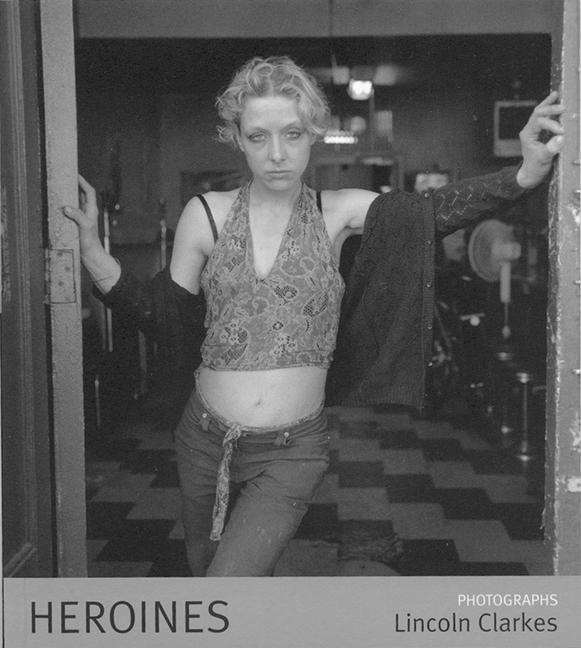
A Room in the City presents Gasztonyi’s five-year project of photographing the residents of the Cobalt, Balmoral, Regent, and Sunrise Hotels in Vancouver’s Downtown Eastside, the poorest postal code in the country. They are represented in private moments, with respect and dignity—in their rooms and on the streets—as they wish to be seen. Gasztonyi’s style continues in the great documentation tradition of Anders Petersen and Josef Koudelka, the photographer of the Roma.
Read More
The Skeleton Dance takes place on the mean, formerly clean streets of Toronto before the century ticked over into the new millennium. This graphic novel artfully depicts the human casualties and debris piled up around the downtown bank towers.
Read More
In Vancouver the avenues are numbered and the streets named. That’s a feature of Vancouver. Vancouver’s Poet Laureate, George McWhirter, has taken on the task of creating an anthology on those features that give the face of Vancouver its identity. East Hastings could fill an anthology, but most of the city goes unversed.
A Verse Map of Vancouver fills the gap in Vancouver’s verse geography by mapping the city, its neighbourhoods, its corner and intersections, its parks and landmarks. A Verse Map is a word ordinance survey by poets of the locality, from those whose names have a legendary place (Pat Lowther, George Woodcock) through a roster of verse surveyors — too great a list to include them all here — who have established themselves over the last three to four decades (John Pass, Evelyn Lau, John Donlan, Daphne Marlatt, Roy Miki, George Stanley, Linda Rogers, Tom Wayman, Meredith Quartermain, Kate Braid, Brian Brett, Bud Osborn) on through to the current generation who are etching their marks on the city (Catherine Owen, Rita Wong, Chris Hutchinson, Mark Cochrane, Russell Thornton, Kuldip Gill, Fiona Lam). Upwards of 100 poets have been gathered here accompanied by the rich city photography of Vancouver artist and designer Derek von Essen.